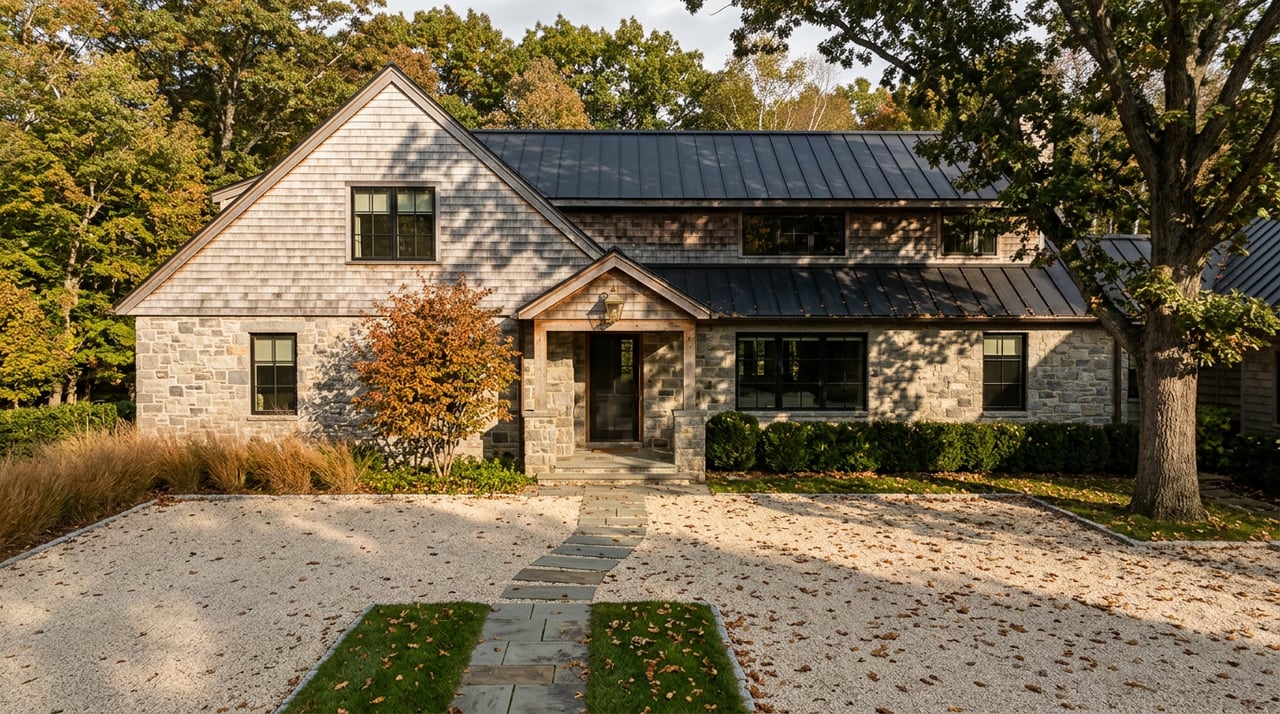
A cottage a few blocks from the water, a Spring Lake address on the listing, and a spreadsheet that pencils out nicely once booking-platform income gets added to the mortgage math. That's the setup a lot of buyers bring to this stretch of the Ottawa County lakeshore. What the listing doesn't say is which government actually taxes that parcel, and in Spring Lake, that answer decides whether the rental income in the spreadsheet is legal at all.
Spring Lake is not one town with one rule. It's a Village sitting inside a Township, each running its own zoning ordinance and its own short-term rental map, and both maps have gotten smaller in the past two years. A buyer who checks the town's general reputation as a lakeshore rental market is checking the wrong thing entirely. The only number that matters is the parcel's.
Two Governments, One Lake, Two Different Maps
The Village of Spring Lake and Spring Lake Township are separate units of government, each with the authority to zone short-term rentals in or out of residential districts. A property can carry a Spring Lake mailing address and sit under either one, and the rules are not the same between them. Head further down the lake toward Fruitport Township and a third rulebook applies, one without a short-term category at all as of recent public records.
This isn't a technicality that only matters at the margins. It's the first fact a buyer needs to establish before doing anything else, because everything downstream, the fee, the map, the approval process, depends on which jurisdiction actually holds the parcel. The county assessor's record settles this. A listing description does not.
What's Eligible in the Township Right Now
Spring Lake Township used to allow short-term rentals as a matter of course across its R-3 "cottage" residential zone, a wide band of the community. That changed in two votes. The Township Board first voted in December 2024 to strip short-term rental status from every zoning district except R-3. Then, on May 12, 2025, the board voted unanimously to narrow even that R-3 allowance down to a single overlay district, a pocket known locally as Strawberry Point, according to Crain's Grand Rapids Business. That single vote removed the Minetta Avenue neighborhood along with Benjamin Avenue, Rhoda Street, View Drive, and North Lake Avenue from eligibility, roughly 60 homes in one motion, some of them closer to the water than anything left inside Strawberry Point.
What's left is small. Strawberry Point represents less than 10 percent of the township's land area and about 5.5 percent of its housing stock. Of the township's roughly 4,000 dwellings, only 221 can currently apply for a new short-term rental permit, per WGVU News. At the time of the vote, only 22 homes in that zone were actually registered, which means the eligible pocket wasn't even full when the board decided to keep it that small.
Township Manager Gordon Gallagher has described Strawberry Point as a neighborhood that already carried a high concentration of second homes and vacation rentals before the overlay was drawn, which is part of why the board chose that boundary rather than a different one. Registering there costs $100 and runs on a three-year cycle, and the township says it will drive past the property to check its condition before approving.
The Village's Version of the Same Squeeze
The Village of Spring Lake runs a separate overlay with its own history of shrinking. In spring 2025, ahead of a six-month moratorium on new permits set to expire, the Village council voted unanimously to remove Rex, Monarch, and Dixie Streets from eligibility, according to Fox17. More than 20 properties sat on those three streets. Six existing short-term rentals were grandfathered in and can continue operating, including through a change of ownership, as long as the use keeps running.
Getting a new short-term rental approved inside the Village's remaining overlay costs more than the township process. Budget $500 a year plus a minimum escrow of $1,000 with the application, and the property still needs special land use approval on top of sitting inside the mapped district. A Village councilmember framed the streets that were cut as ordinary residential blocks the council wanted to protect for full-time neighbors rather than convert into transient lodging, a rationale that lines up with how both governments have talked about these changes.
Here's what the two maps look like side by side.
| Spring Lake Township | Village of Spring Lake | |
|---|---|---|
| Where STRs are allowed | Strawberry Point overlay only | Village overlay, minus Rex, Monarch, and Dixie Streets |
| New permit cost | $100 | $500 annually plus $1,000 minimum escrow |
| Additional approval | None beyond registration | Special land use approval required |
| Registration term | 3 years | Annual |
| Most recent map change | Narrowed May 12, 2025 | Three streets removed spring 2025, before a moratorium expired |
Why the Default Runs Backward Here
Most people shopping a lake town assume short-term rental is the default unless a rule specifically says otherwise. In Spring Lake, the legal default runs the other way, and there's a Michigan Supreme Court case behind it. In Reaume v. Township of Spring Lake, the court upheld a lower ruling that treated short-term rentals in residential zones as a commercial use, effectively a form of motel operation, and therefore outside what residential zoning permits unless a municipality specifically carves out an exception. Other Ottawa County communities, including Park Township, have since cited that same precedent in their own efforts to limit short-term rentals.
That legal foundation explains the pattern better than any single vote does. Neither government needs to justify banning short-term rentals from a given street. The burden runs the other direction: a parcel is only eligible if it sits inside a district a board has specifically drawn to allow it. Both boards have shown they're willing to redraw those districts smaller, and both have done so more than once in the past two years.
What Grandfathering Actually Protects
A short-term rental operating legally outside the current overlay wasn't shut down when the map changed. It picked up nonconforming use status, which lets it keep running, and that status transfers to a new owner as long as the rental use continues without a break. This matters for a specific kind of buyer: someone purchasing a property that already carries an active registration outside Strawberry Point or outside the Village's current lines.
It doesn't extend any further than that. Grandfathering protects a specific, already-registered use. It doesn't apply to a similar house two doors down that never registered before the map shrank. It doesn't restart if a registration lapses before a sale closes. And it says nothing about a property outside any current or former overlay that a buyer hopes to bring into short-term use for the first time. Every one of those scenarios needs its own answer from the government that actually holds the parcel, not an assumption based on what a neighboring house is doing.
The Diligence That Actually Belongs on a Closing Checklist
Before writing an offer with rental income in the plan, the sequence that actually protects a buyer looks like this. Pull the parcel from the county assessor's record to confirm which government taxes it, Village, Township, or Fruitport Township if the property sits at the head of the lake. Request the current overlay map directly from that government's planning or building department rather than relying on a plat book or a listing agent's general sense of the area. If the address falls inside the eligible zone, ask whether it already carries an active registration, and if so, whether that registration transfers automatically or whether a new application is required at sale. If it falls outside the zone, ask directly whether any legal nonconforming use exists on that specific parcel, in writing, from the office that would enforce it.
None of this is a reason to rule Spring Lake out. Both governments have said the conversation around these ordinances isn't finished, and boards on both sides have acknowledged they could revisit specific boundaries if property owners raise it. For an investor who wants a simpler starting point while that conversation continues, Norton Shores sits close by within the same lakeshore corridor and currently carries no short-term rental ordinance of its own, a straightforward alternative worth weighing against a Spring Lake parcel that falls outside either overlay.
The map is public record. So is the parcel's jurisdiction. Getting an answer before an offer is a phone call, not a guess.
If you're weighing a short-term rental purchase anywhere along the Spring Lake or Grand Haven corridor, Turn-Key Signature Homes can help you pull the parcel's jurisdiction, walk the current overlay maps with you, and get the registration status confirmed in writing before you write an offer. Let's Connect.